04.11.2026
News article
Ulysseus AI Hub session: AI for Your Thesis
The brand-new guide books, Empowering the Edible City and Towards an Edible City, offer readers fresh perspectives on building a sustainable food system of the future.

Haaga-Helia has contributed to the creation of two guidebooks on food systems for developers and entrepreneurs. The guidebooks were produced as part of the Urban&Local project.
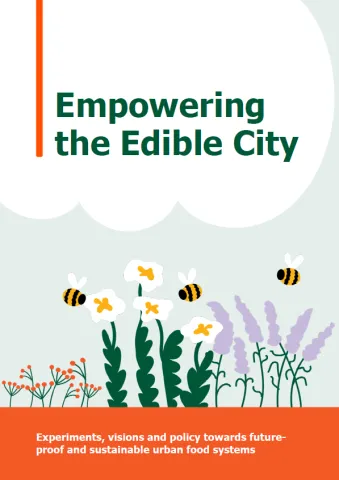
The guide Empowering the Edible City is aimed particularly at developers and decision-makers. It presents a vision of an edible city, where the food system and urban development evolve hand in hand. Building a sustainable food system requires the active involvement of both businesses and developers.
The guide Towards an Edible City emphasizes the role of entrepreneurship and networks in the transformation of the food system. It offers companies insights into finding new customers, sharing resources, and developing products.
The guidebooks provide practical ways to advance sustainability in food chains. They offer perspectives on topics such as indoor farming technologies, agroecological local production, nutrient cycling, and the importance of supporting food tourism and business clusters.
The guidebooks also compile experiments carried out in the Urban&Local project: growing mushrooms using biowaste, piloting food-themed market events, and testing the potential of urban farming in advancing carbon neutrality.
You’ll find case examples ranging from small to large—such as how an unknown dumpling restaurant rose to popularity and how by-products from apple juice production were transformed into a new food product.
The guides have been published on Forum Virium Helsinki’s website:
Empowering the Edible City (for Developers)
Towards the Edible City (For Entrepreneurs)

The guidebooks were published as part of the Urban&Local project, which Haaga-Helia has been involved in for the past three years. The project was coordinated by Forum Virium Helsinki, with partners including Metropolia University of Applied Sciences, Haaga-Helia University of Applied Sciences, Perho Culinary, Tourism and Business College, and the City of Vantaa. The project was funded by the European Regional Development Fund.